
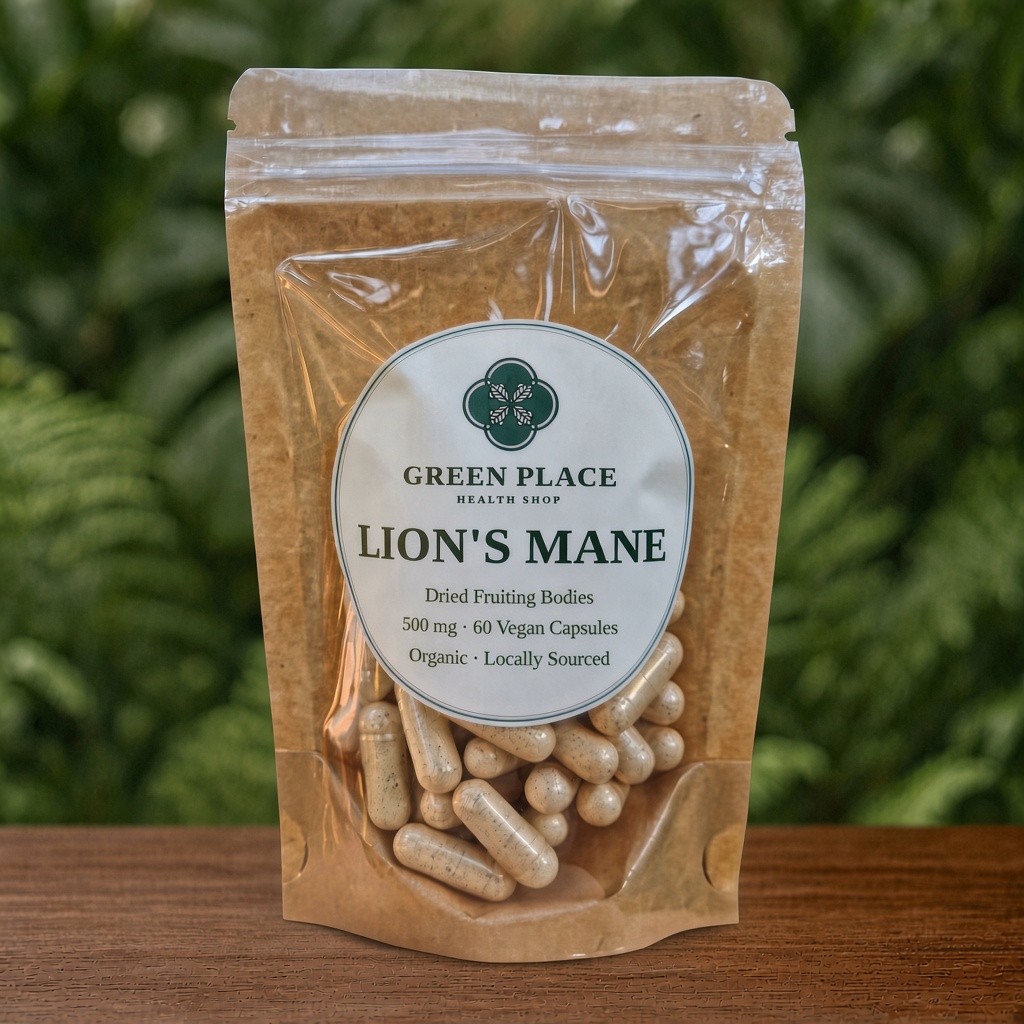
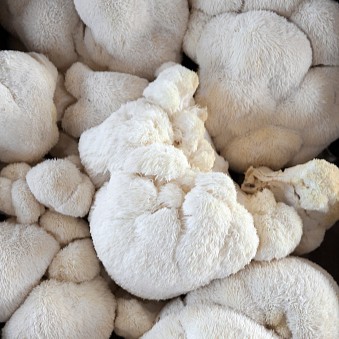
Organic, dried fruiting body — 500mg per capsule, 60 vegan capsules. Grown locally in South Africa, no fillers, no extract, just the mushroom itself.
R250
Ingredients: Organic Lion's Mane fruiting body (500 mg per capsule), vegan capsule shell (hypromellose). Daily dose: 500 mg–3,000 mg (1–6 capsules). Full details
† Daily Value not established.
Active: Organic Lion's Mane (Hericium erinaceus) fruiting body, dried, 500 mg per capsule.
Other: Vegan capsule shell (hypromellose). No fillers, additives, preservatives or extracts.
Take 1 to 6 capsules per day, with water, or as directed by your healthcare practitioner.
Store below 25°C in a cool, dry place away from direct sunlight. Keep out of reach of children.
Lion's Mane (Hericium erinaceus) makes two families of compounds that researchers have studied for their effects on nerve cells. Hericenones are found in the fruiting body, which is what is in our capsules. Erinacines are found mainly in the mycelium, the root-like network of the fungus. The fruiting body also contains beta-glucans (polysaccharides from the fungal cell wall) and phenolic compounds.
In cell studies, several hericenones and erinacines made astrocytes (support cells of the nervous system) produce more NGF, a protein involved in the survival, growth and maintenance of nerve cells. In these experiments the compounds acted on the support cells. They did not trigger NGF production in nerve cells on their own.
Of these compounds, only certain erinacines (A and S, from the mycelium) have so far been shown to cross the blood–brain barrier. Whether the hericenones in the fruiting body reach the brain and act there is still debated by researchers. This is why we describe the research as promising rather than proven for this product.
Mice given Lion's Mane as part of their diet showed changes in nerve signalling in the hippocampus, a region involved in memory, and did better on a recognition memory test. Results in animals don't always carry over to people.
In laboratory and animal models, hericenones and erinacines reduced signalling through NF-κB, a pathway involved in inflammation. This is early-stage research, not a proven effect in people.
Beta-glucans are not absorbed whole. They are studied mainly for how they interact with immune cells in the gut, and research on them focuses on immune-modulating activity.